Members' news
·
20 Nov 2026
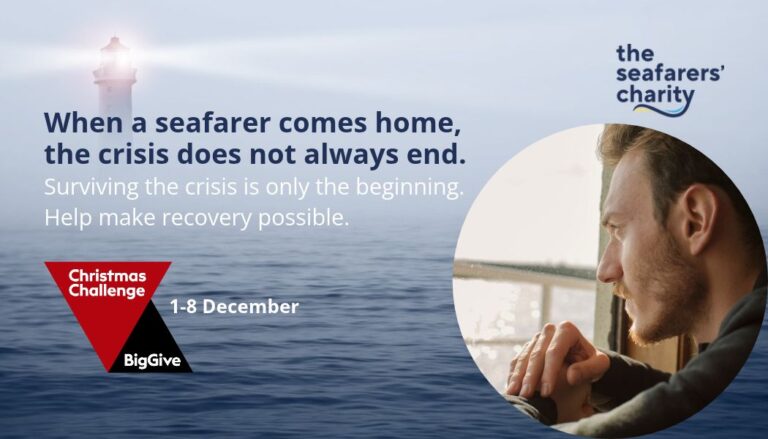
Help seafarers recover after crisis at sea
Read ↗


Total annual operating costs in the shipping industry fell by an average of 0.3 per cent in 2013, according to international accountanting firm Moore Stephens. This compares with the 1.8% average fall in costs recorded for the previous year. Crew costs was the only category this time to show an increase over the 12 month period. This indicates, says Moore Stephens, that “shipowners continued to focus on managing costs and conserving cash in 2013.”
The findings are set out in OpCost 2014, Moore Stephens’ ship operating costs benchmarking tool, which reveals that total operating costs for the tanker sector were up in 2013, the financial year covered by the study, but down in the bulker and container ship sectors. The tanker index was up by two points, or 1.1%, while both the bulker index and the container ship index were down by two points, or 1.2%, on a year-on-year basis.
Moore Stephens partner Richard Greiner says: “This is the second successive year-on-year reduction in operating costs. The fall in costs for 2013, however, is 1.5% below that recorded for 2012, and coincides with a period of slowly returning confidence in the shipping industry, according to the Moore Stephens Shipping Confidence Survey.”
He notes: “The fact that crew costs were the only category to show an increase for 2013 is perhaps a reflection of a diminution in the number of owners and operators exiting the industry and a reminder that investment in good people is a must.”
“Expenditure on repairs and maintenance and on stores was down in 2013,” he says, “but by a smaller margin than in 2012, so it is to be hoped that owners and operators are continuing to pursue the sort of sound husbandry which competition and regulation demand. Meanwhile, the fall in insurance costs this time of 0.3% is significantly down on the 6.2% decrease for 2012, suggesting that underwriters in the hull market are taking a harder line.”
Mr Greiner concludes: “Overall, the fall in operating costs recorded in OpCost 2014 must be good news for owners and operators. So, too, must the gradual and continuing improvement in the global economic climate, if not the current political unrest. Shipping operates on a global stage and must inevitably be affected by international events.”
Seafarers’ unions and employers’ representatives have reached an agreement on the sensitive issue of the exclusion of seafarers from some EU labour laws. A joint statement says that the agreement aims to close some legal “loopholes” and ensure that seafarers are treated on an equal footing with land-based workers.
Although not binding, the European Transport Workers Federation (ETF) and the European Community Shipowners Associations (ECSA) say the deal “may be hailed as a very positive outcome, which demonstrates the need for an active and constructive social dialogue at European level”.
EU labour laws generally apply to all workers in all sectors but, until now, certain EU directives allowed member states to exempt seafarers on the basis of the particular nature of maritime transport. In November last year, the European Commission issued a legislative proposal, amending the relevant EU directives on insolvency, European works councils, information and consultation, collective redundancies and transfer of undertakings to include seafarers.
“This initiative will have a positive impact for seafarers in the full enjoyment of their right to information and consultation within the undertaking and their right to fair and just working conditions.” said Philippe Alfonso, ETF political secretary for maritime transport.
Asked by London Matters whether this was a step towards an EU equivalent of the US Jones Act, Mr Alfonso said: “Please note our Agreement is a non-binding one and it is only aimed at making a contribution to the debate in a context where the legislative procedure goes on: the EU co-legislators, Council and Parliament, are indeed re-discussing the initial Commission proposal on the issue of the exclusion of seafarers. In other words, today’s Social Partners initiative is only aimed at sending a message that on the issue of the exclusions from the relevant Directives (and on this issue only), we speak with one voice.”
A warm welcome to Essex Court Chambers, Maritime London’s newest member.
Essex Court Chambers is a leading set of barristers’ chambers specialising in commercial, international and European law. Its members advise and act in a broad range of litigation, arbitration and dispute resolution. Essex Court Chambers has a strong focus on the maritime sector with half of their barristers involved in shipping related cases. A
Members handle a wide variety of international contracts of sale (CIF and FOB contracts), contracts for the carriage of goods by sea (charterparties and bills of lading), road, rail and air and other related transactions such as forwarding agency agreements and bankers’ letters of credit. Much of this work is of a litigious nature involving actions in the High Court or references to arbitration.
British shipowners and seafaring unions need to work closely together to campaign for government measures to improve the competitiveness of the merchant fleet, Chamber of Shipping chief executive Guy Platten told the recent Nautilus International UK branch meeting in Belfast.
Speaking during the same session on the future of the ferry industry, the union’s national ferry organiser Micky Smyth outlined Nautilus’ s case for regulatory protection of seafarers’ pay and conditions on ferries sailing on European routes.
Mr Platten said shipping is often talked of as an invisible industry, but many ferry companies are among the most recognisable brands in the country, carrying more than 38m passengers a year.
However, he warned, many companies are facing intense pressure. “Too many are operating on a knife-edge, facing an onslaught of rules and regulations, the loss of duty-frees and the cack-handed implementation of the sulphur rules,” he added.
Mr Platten said the Chamber wanted to see the government undertaking a ‘root and branch’ review of the competitiveness of British shipping. There is insufficient investment in new tonnage and there should be a concerted drive to grow UK ownership, he argued.
The union’s national ferry organiser Micky Smyth told the meeting on 30 September 2014, that the industry has been transformed over the past 20 years, with ferries being flagged out and working conditions being cut back.
Mr Smyth said the Union’s Fair Ferries Campaign has been launched to “address the recruitment, retention, training and, indeed, the very survival of the British officer in the ferry sector”.
He said that the campaign seeks to secure government support for “regulations to secure decent standards of employment on ferries operating services within Europe, making sure that officers and crew are covered by conditions of employment which are on a par with, or superior to, the countries which they serve”.
This should be backed up, Mr Smyth argued, by enforcement of maritime safety standards and of the laws covering the issue of work permits and the payment of the national minimum wage for seafarers working in UK waters, along with effective action to deal with clear breaches of the Equality Act on UK vessels.
In a new position paper, European shipowners have asked EU member states to adopt a “clear, long-term and above all harmonised position on the issue of the discharges of washwater produced by open-loop scrubbers installed on ships”. The paper comes as shipowners prepare to meet new sulphur regulations that will mean most having to buy more expensive distillate fuel. Already the move has led to two UK-continent ferry route closures.
The EU Sulphur Directive requires that, as of 1 January 2015, all ships sailing in the SECAs (Sulphur Emission Control Areas – the Channel, the North Sea and the Baltic Sea) use bunker fuels with a maximum sulphur content of 0.1% or that the same level of emissions is reached by the use of alternative fuels or compliant abatement technologies.
The European Communities Shipowners’ Associations (ECSA) says that the EU Water Framework Directive (WFD) is a source of concern as it sets limits for the content of pollutants in ports, estuaries and coastal areas. This in turn means that the discharges of washwater will in some areas be well under the limits set by the WFD, while in other areas with poorer water quality, washwater discharges might be prohibited by Member State legislation. The resulting lack of harmonisation and clarity will without a doubt hamper the uptake of scrubber technology.
What is more, according to ECSA, the WFD foresees a progressive reduction of some substances and a complete phasing out of others. However, due to a lack of information on the actual composition of washwater discharges, it is currently not possible to ascertain whether scrubber discharges fall within the two aforementioned categories. Hence, more scientific research on the actual ecological effects of scrubber discharge is necessary.
Patrick Verhoeven, ECSA Secretary-General says: “The current uncertainty jeopardises investments already made by shipowners eager to meet the compliance criteria before the fast-approaching deadline of 1 January 2015, but more importantly hinders the commissioning of future scrubber installations. Any restriction of the use of scrubber technology should in our view be preceded by a scientific assessment with any changes in the approval procedure of such systems reflected under IMO rules. Also, shipowners that have already committed to a scrubbing system should not be disproportionately penalised”.
The implications of the 0.1% sulphur rule will be one of the hot topics at the International Bunker Industry Association (IBIA) annual convention and forum in Hamburg, 3-7 November. The event features over 30 expert speakers who will be looking at new fuels, emerging markets, quality and integrity and compliance with the latest regulations.
IBIA chief executive Peter Hall said: “The management of marine fuels is at the top of every shipping company’s agenda with so many questions surrounding new fuel types, ECA compliance, quality and testing. Our unique four day event takes place during the week of the Hamburg Eisbeinessen, a huge maritime industry gathering and will help to clarify many of the issues facing shipping company executives.”
Clarksons’ chief financial officer, Jeff Woyda, has been appointed as a non-executive director of the International Transport Intermediaries Club (ITIC). Providing specialist professional indemnity insurance, ITIC is the world’s leading insurer for professionals who provide services to the transport industry. Its marine sector provides professional indemnity insurance to the world’s leading shipbroking companies, liner and port agents, naval architects and ship and crew managers.
In a keynote speech to the British Ports Association annual conference in Belfast UK Chamber CEO Guy Platten supported the concept of arbitration in port charges disputes.
Mr Platten focused on the broad challenges facing the industry, but explained that a system must be found to mediate disputes between shipping companies and port operators over the cost of doing business.
He said: “Shipowners, just like commercial ports, are in business to make money – and expect to negotiate with their suppliers in order to secure a good service at a competitive price. Some UK ports are effective monopolies – and I reveal no confidences when I say that there are concerns that this results in them treating shipowners as captive customers.
The charges levied by ports comprise a significant element of UK shipping’s cost base, Mr Platten said. He continued: “And, as we look ahead to the forthcoming competitiveness review, we will be looking at all elements of that cost base. We believe in a free market, and you won’t hear us arguing for controlled prices – but we have little confidence in the statutory safeguard against excessive charges.
“We believe in customer choice,” he stressed. “But,” he added, “in parts of the ports industry, it doesn’t exist – and, realistically, it is never going to. And in those circumstances, your customers need protection. Scotland has taken the first steps towards an arbitration process. But this process needs to have teeth, and it must be implemented across the whole of the UK.”
Alastair Farley, one of Maritime London member Watson, Farley & Williams’ (WFW) founding partners, has stepped down from the firm after 32 years. One of three partners, along with Martin Watson and Geoffrey Williams, who formed WFW in 1982, Mr Farley has seen the firm grow into a 133 partner firm with 14 international offices, 780 staff worldwide and annual revenues of GBP117 million in 2013/14.
He commented: “As a founding partner I have seen the firm grow and flourish far beyond our initial vision. The sheer energy, enthusiasm and entrepreneurial spirit that has brought this about has been a pleasure and privilege to have been a part of, and would not have been possible without the fantastic people who have made the firm what it is today.”
WFW managing partner Chris Lowe, said: “We obviously all owe Alastair a huge debt of gratitude and we thank him for his enormous contribution to the culture and success of WFW. He leaves behind a legacy of innovation and an entrepreneurial spirit that we will continue to build upon. Alastair will be continuing with his existing independent consultancy practice, with which we wish him well.”
The Mission to Seafarers is delighted to announce to its friends and supporters that its annual Festival of Nine Lessons and Carols will take place on Wednesday 10 December 6pm at its historic home in the City of London, St Michael Paternoster Royal. This event is one of the highlights of the London shipping industry’s charity events calendar.
There will be a special performance by the P&O Ferries Choir, who won first prize in the BBC television series Sing While You Work. The choristers are drawn from the company’s seafarers and shore staff on the Dover to Calais route.
If you would like to purchase tickets for A Festival of Nine Lessons and Carols (£27.50 each) please contact Rebecca Watson, corporate partnerships and events officer, by email [email protected], or by telephone on 020 7246 2939 or you can book your tickets online via Eventbrite: https://a-festival-of-nine-lessons.eventbrite.co.uk