Members' news
·
20 Nov 2026
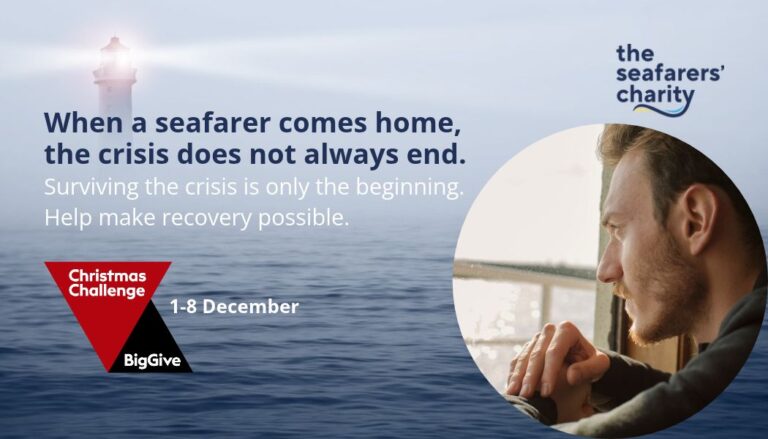
Help seafarers recover after crisis at sea
Read ↗


The P&I Clubs have all been issuing comprehensive advice to their members on the many complex legal issues caused by OW’s crash.
The 7 November bankruptcy of the main operating units of major bunker trader and supplier OW Bunker continues to send out shock waves. Only eight months ago the Danish based group was valued at nearly USD1bn in an IPO. Now courts around the world are starting to pick up the pieces.
As Steamship Mutual notes: “The issues arising from OW’s bankruptcy, and in particular the possibility that sub-contractors or assignees of OW will pursue claims for unpaid bunker supplies are not straightforward and fact sensitive.” It advises any of its members receiving such claims or threats of arrest to contact the Club’s managers.
The UK Club has also published detailed question and answers covering practical issues facing owners who have taken bunker stems involving OW.
In many cases it is unclear who is entitled to be paid for bunkers received, raising the threat of owners being pursued by different parties for the same payment. Reuters report that major dry bulker owner Thai-based Precious Shipping has asked the Singapore court for a decision on which company it should pay for fuel it bought.
“When (OW Bunker) raised the invoice, we asked them for the ‘No Objections Certificate’ (NOC). At that time their financial troubles starting hitting the headlines,” Precious Shipping’s managing director, Khalid Hashim, said in an emailed statement.
Mr Hashim was reported to have said that legal action was taken as there had been no response nor agreement among OW Bunker and physical suppliers on payment terms. “We approached the courts to get their guidance/order on whom to pay to avoid making any incorrect payments.”
At least seven barges are known to have been arrested.
Meanwhile the UK-headquartered International Bunker Industry Association (IBIA) has acted to support companies and individuals impacted by last week’s collapse of OW Bunker.
IBIA Chief Executive Peter Hall said: “This is an unprecedented occurrence and our thoughts are with the very large number of competent hard working ex-employees now urgently in need of support and industry contact. It is important that dialogue is maintained across the supply chain and we are pleased to be able to support the Singapore bunkering community.”
International accountant and shipping consultant Moore Stephens says some recent changes to guidance on the UK tonnage tax regime are “unhelpful”. The firm says it is assisting the UK Chamber of Shipping in making representation to Her Majesty’s Revenue & Customs on the issue and will itself also be making a separate representation.
Moore Stephens tax partner Sue Bill says, “None of the changes are fundamental. Indeed, some of them are helpful, for example the revised comments regarding the circumstances in which a tonnage tax company is regarded as only temporarily having ceased its activities and therefore eligible to be within the regime when it resumes activities. Such changes show that HMRC is prepared to be more flexible in certain circumstances.”
“There are, however,” she adds, “a couple of areas where the update is unhelpful. For example, HMRC has said that it does not regard the recent decision in Euroceanica (UK) Limited v HMRC (2013) UKFTT 313 as binding. In Euroceanica, the First Tier Tribunal, which hears appeals against HMRC decisions relating to tax, held that interest received on a security deposit which was required in order to take out bank loans to acquire ships in the tonnage tax regime was within the tonnage tax ring-fence, and that therefore no further tax was payable. However, HMRC has now said that, as a general principle, it does not accept that interest arising on such security deposits is within tonnage tax. Given the First Tier Tribunal’s decision, it is difficult to see the justification for HMRC’s position.”
“The revised guidance also includes the comment that the transfer pricing rules apply where a UK company lends funds to a UK tonnage tax company to which it is connected. This means that there is likely to be taxable notional interest receivable outside the tonnage tax ring-fence and no relief for any notional interest payable unless, for example, some or all of the loan is performing an equity function. It is well-known within the shipping industry that this is a potential problem but it is now clear that HMRC is not going to be flexible on this issue. This is unhelpful and means that tonnage tax groups must take care to minimise or eliminate any loans to tonnage tax companies being made by other UK companies in the same group, whether or not the lender is a tonnage tax company.”
New industry guidance from Lloyd’s Register (LR) “helps to make offshore operations safer for marine and energy operators”.
The new Guidance Notes for Collision Analysis assist owners, operators, and designers of offshore units with identifying potential collision scenarios, assessing the relative risks and conducting numerical analysis, establishing representative collision loads, and measuring the impact of these loads on the structural integrity of offshore units.
A collision may occur as a result of a vessel losing its positioning or navigational abilities due to structural, mechanical, or electrical failure, human error, and environmental conditions.
“Assessing the impact of potential collisions is critical to the longevity of any offshore unit not only from a design perspective, but also to help ensure a safe operating environment,” says Phil Rushton, senior engineer for offshore structures, and one of the primary authors steering the development of this latest guidance from Lloyd’s Register.
A primary goal for the launch of these new Guidance Notes is to provide the direction and criteria to help industry increase the level of protection against collisions at sea. The Guidance Notes cover everything from vessel groundings to collisions with merchant, naval, and support vessels.
“Collisions at sea represent one of the top safety hazards for any operator,” highlights Rushton. “Mitigating collision risks is vital to the protection of our environment, the safety of industry’s people working offshore and the longevity of offshore energy infrastructure.”
The UK Defence Club, the largest provider of FD&D (legal costs) insurance to the maritime industry, has announced a “0% general increase in premiums” for the 2015 policy year and rewards to members through the launch of a Continuity Credits loyalty scheme.
The Club says that members who have been with the mutual for a minimum of one year can now receive discounts with further reductions reserved for longer periods of membership.
It says it will reward members at three levels with premium reductions on offer in an increasing scale for members. Those with one year of membership will receive a 2.5% reduction, three year members will receive a 5% reduction and five years of membership will qualify for a 7.5% reduction in premium. Members insuring their full fleet will receive an additional discount of 1.5%
The Club’s chairman and manager, Daniel Evans, says: “As we enter our 126th year we wanted to give something back to our members. We are focused on supporting our members as well as building on our reputation as a specialist provider of FD&D insurance to the maritime industry.
He adds: “The Club weathered the increased claims environment post-2008 comfortably and is very well reserved, consequently we haven’t had to impose anything like the mandatory deductibles or changes in terms required by many other clubs. So, from a position of financial strength with a 0% general increase we would now like to reward our members for their continued entries. Continuity Credits are about rewarding our members’ commitment to us and if you become a member and stay one you will also be entitled to the reward.”
All Continuity Credits will apply to premiums from the 2015 policy year meaning members could benefit as soon as February next year, the Club points out.
Steamship Mutual P&I Club and a panel of medical and other experts have worked with maritime e-Learning leader Videotel to produce a 15-minute training programme, Ebola – Staying Safe, which is being distributed free of charge to the world’s merchant fleet. It includes footage from West Africa and was produced in the last eight weeks to ensure the most up-to-date information, explains what Ebola is, what its symptoms are, and how the virus spreads. It outlines the ways in which crew members can protect themselves, and also what steps masters, ship owners, and ship managers can take to keep crew members safe from harm.
Videotel’s parent company, US-based KVH Industries has created a website for all mariners to download the free video and an accompanying workbook. Also KVH has delivered the entire video programme to its IP-MobileCast to vessels worldwide, which will automatically receive the video for immediate viewing onboard.
“The Ebola epidemic is a crisis of worldwide proportions and one where commercial ships and seafarers are at risk given the global nature of their jobs,” says Martin Kits van Heyningen, KVH chief executive officer. “Distributing the free video by digital means enables us to get the information to all mariners quickly, especially seafarers who may be in or near a port in the affected region, where it is unsafe to go ashore.”
“The Ebola training film covers matters of life and death, much like many of our other programs in our 900-course training library,” says Videotel’s Nigel Cleave. “It has to be accurate, engaging, and well designed from a didactic point of view so that mariners of all cultures and backgrounds understand it. Our ship owner and ship manager clients are facing Ebola-related decisions every day as their ships approach and leave affected ports and at Videotel our first instinct is to support them.”
KVH is being aided in its video distribution efforts by seafarer agencies, including the International Seafarers’ Welfare and Assistance Network (ISWAN), which is promoting the video to some 450 seafarer centres around the world.
The London P&I Club says its ship inspection department has recently found problems with masters’ night order books.
In the latest issue of its StopLoss Bulletin, the club notes, “The value of masters’ night orders should not be under-estimated in the quest for the efficient and safe performance of a ship, particularly during port calls. Invariably, deep-sea masters function as ‘day-workers’ and, with an early morning ETA at the pilot station, there is a great deal for ships’ officers and crew to prepare after a long voyage. Efficient planning in advance can help an operation to be carried out in a controlled and safe manner with the minimum of stress for all parties.
The master’s night orders are traditionally a set of bespoke instructions for overnight bridge officers to digest and act upon to ensure that, by the time a ship reaches the pilot station, all required crew are at their stations and all physical preparations are made, and the ship is in all respects ready to enter port.
The Club says, “When writing night orders, there are a number of points which could be included in the instructions to be considered by the master. These include calling the master with sufficient time available to appraise the full navigational situation and to develop proper night vision before reaching the pilot station or taking the con, and calling the pilot station to confirm ETA and berthing prospects. Masters’ night orders should also seek to ensure that day crew are called at a reasonable time so that items such as anchors are cleared, pilot boarding arrangements are safely in place, and flags/call signs are ready to be run up.”
http://www.londonpandi.com/ship-inspection-stop-loss/
International law firm and Maritime London member Hill Dickinson says one of its partners, Patrick Hawkins, will be its first head of global shipping. Mr Hawkins, who also heads the firm’s Greek Office, will manage and co-ordinate their renowned and expanding international shipping practice.
The firm says that recent high-level recruitment has included former Clyde & Co partner Chris Edwards in Singapore in June this year, and Kennedys partner Anthony Woo in the new Hong Kong Office in September. In the last 12 months the firm has also relocated two other shipping partners from London to its burgeoning overseas operations with Michael Mallin and David Reardon opening new offices in Hong Kong and Monaco.
Mr Hawkins said: “I am looking forward to building on our significant investment in the firm’s European and Asia-Pacific offices in recent years and ensuring that the firm’s overall shipping capability is completely aligned to the needs of our clients worldwide. I will be working with the 100 strong team of global shipping lawyers worldwide to coordinate and further expand our current offering to the full range of our established client base. These include shipowners, charterers, P&I clubs, port and terminal operators, insurers and reinsurers and shipping industry suppliers who, we are confident, will welcome the enhanced service this will provide.”
London partner Russell Gardner has been appointed as head of shipping in the UK. Russell has strong marine experience and has acted in many high profile matters. Russell will lead a diverse team of specialist lawyers in both dry and wet work, and support the Global Head of Shipping and Marine Head within the wider remit of the firm’s international profile.
French classification society, and Maritime London member, Bureau Veritas (BV) has developed a voluntary notation intended to assist shipbuilders and operators reduce underwater noise radiating from ships.
The comprehensive set of standards and measuring services is grouped as NR614 Underwater Radiated Noise (URN). It aims to control and limit the environmental impact on marine fauna of all self-propelled ships and provide a standard and a system to assess compliance with specific vessel requirements for underwater radiated noise.
It covers both shallow and deep water conditions, sets out a dedicated comprehensive measurement procedure, explains how to manage measurement uncertainties and sets specific underwater noise level requirements.
Jean-Francois Segretain, technical director, Bureau Veritas Marine & Offshore Division, says, “Underwater noise radiating from ships is acoustic pollution, and there is no doubt that it will be the next big area to be tackled by regulators. This notation, backed by careful research with an extensive network of partners, means we can help designers, yards and operators to be ahead of regulation. And it makes commercial sense. Reducing underwater noise directly contributes to reduced noise and vibration levels on board, which improves passenger and crew comfort. There is also a strong link between fuel efficiency and noise. Quieter ships burn less, and we can help make ships quieter and so more efficient.”
One of the main drivers of the notation is to aid European stakeholders in fulfilling the requirements of the Marine Strategy Framework Directive. This aims to improve the environmental state of European waters by proposing mitigation solutions to be put in place by 2016, with their efficiency proved by 2020. The BV notation has been issued in parallel with the European research project AQUO, which is focused on underwater noise, and includes the work of 13 partners – shipyards, hydrodynamics research institutes and bio-acoustic experts – from eight countries, and an end user committee has been built to review the project, including BV’s notation.
London International Shipping Week 2015 (LISW15, 7 – 11 September) will feature as its highlight the one-day LISW Conference and Gala Dinner on Thursday 10 September.
The Conference will be held at the spectacular Willis Building in the heart of the City of London, where industry leaders and top government speakers will focus on London’s role at the heart of maritime industry. Later in the evening, the Gala Dinner (preceded by a Champagne Reception) will take place at the five-star Grosvenor House Hotel.
The other parts of the week will be filled with numerous high quality events aimed at ship owners, charterers, operators and maritime services professionals of all kinds.
With a wealth of industry functions planned, London International Shipping Week is intended to be the high level networking opportunity of the year for leaders across all sectors of the international shipping industry – regulators, charterers, ship owners, ship managers, lawyers, brokers, bankers, insurers, ship suppliers, ports and shipping service providers and all involved in the shipping world.